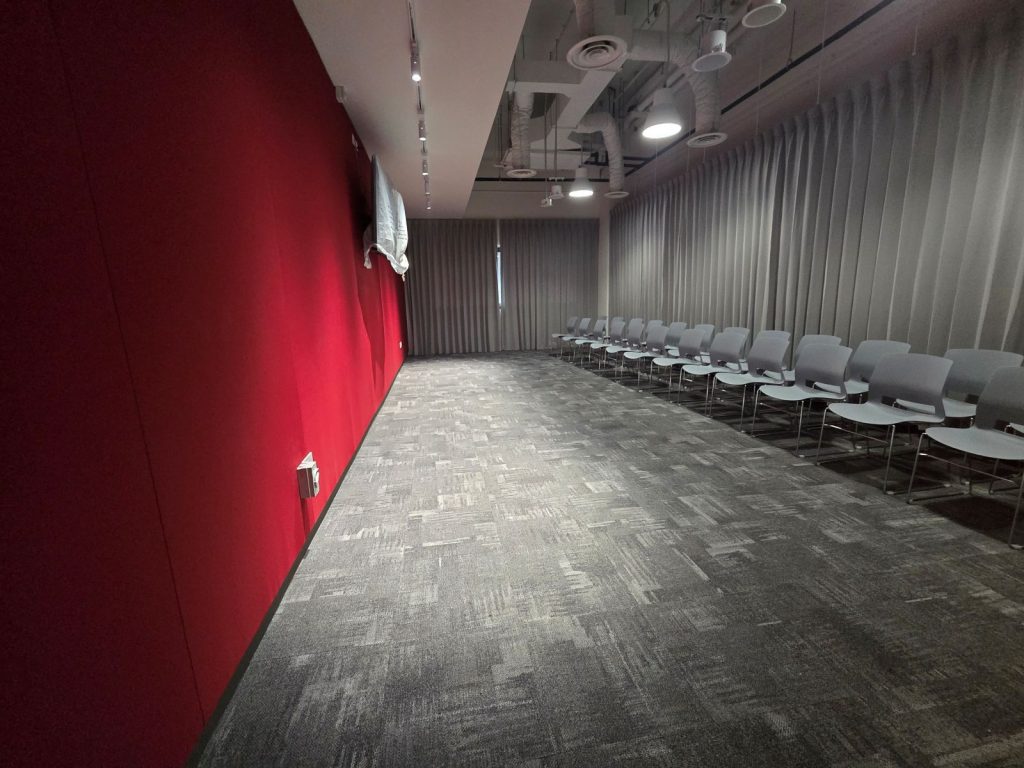
We are highlighting our latest acoustic timber and fabric panel installation in a music and dance studio.
When designing a dance studio, the visual aesthetic is often the top priority—mirrors, open space, clean lines, and high ceilings. But for dancers and instructors, acoustic comfort is just as crucial. Hard floors and mirrored walls create extreme reverberation, turning music into a muddy mess and forcing instructors to strain their voices.
Our latest installation solves this exact challenge by combining high-performance acoustic engineering with a sleek, industrial aesthetic. Here is a look inside our recently completed dance studio project.
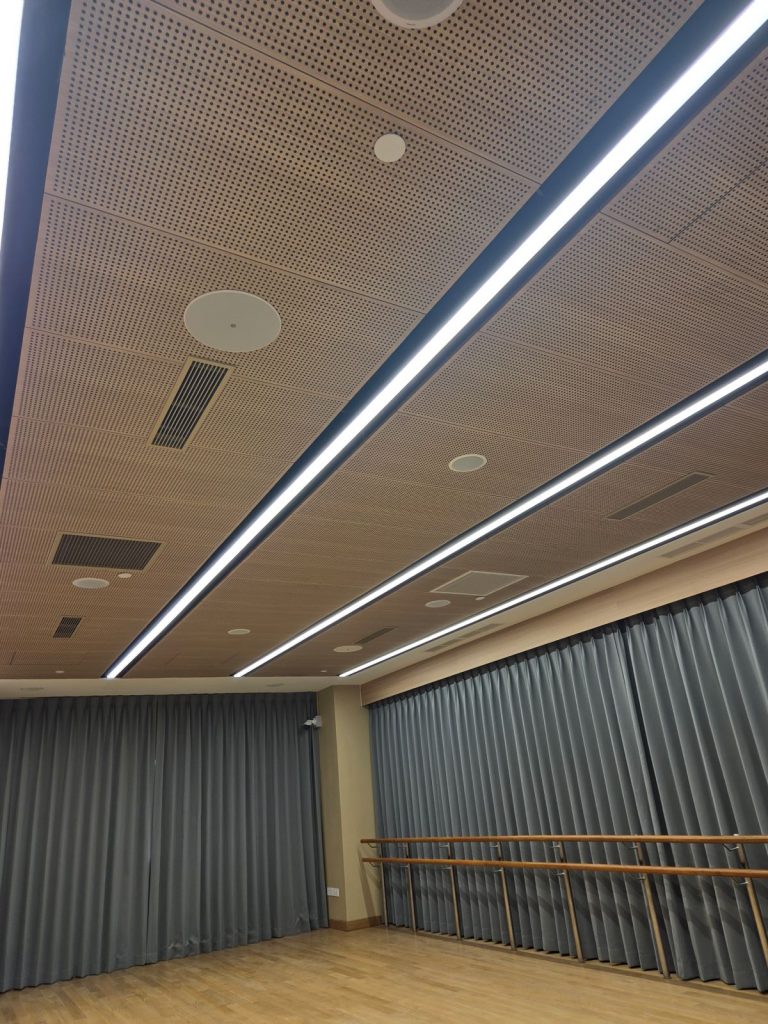
Model: Perforated 18/8
Type: Open ceiling installation with black accessories
Infill: Stonewool 60kg/m3
Location: Dance studio
NRC: 0.8
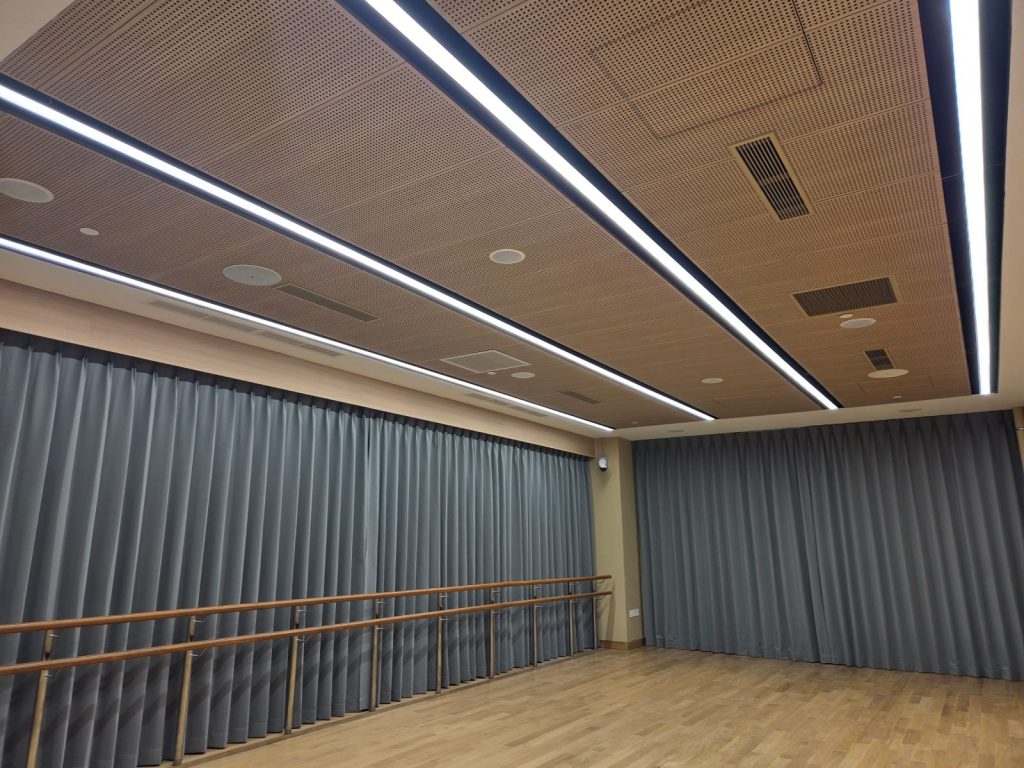
Dance studios require precise sound clarity across low, mid, and high frequencies—heavy basslines need to stay punchy without echoing, while high frequencies like vocals and counts need to be crisp and clear.
1. The Perforated 18/8 Panel
We utilized the 18/8 Perforated Model, which features 8 mm diameter perforations spaced 18 mm apart. This precise pattern balances acoustic absorption with a clean, modern texture. Sound waves pass directly through the panel perforations rather than bouncing off hard, reflective surfaces back into the room.
2. High-Density 60 kg/m³ Stonewool Infill
Behind the perforated panels sits a 60 kg/m³ stonewool infill. Stonewool’s high-density fibrous structure converts sound energy into kinetic heat energy, absorbing low-to-mid frequency reverberations. This density prevents sound leakage and stops acoustic flutter from building up in the open ceiling void.
3. Reaching an NRC of 0.80
Together, the 18/8 perforated panels and 60 kg/m³ stonewool achieve an impressive Noise Reduction Coefficient (NRC) of 0.80. This means the acoustic system absorbs 80% of the sound energy that strikes it, dramatically reducing reverberation time (RT60) and creating an optimal acoustic environment for high-volume playback and instruction.
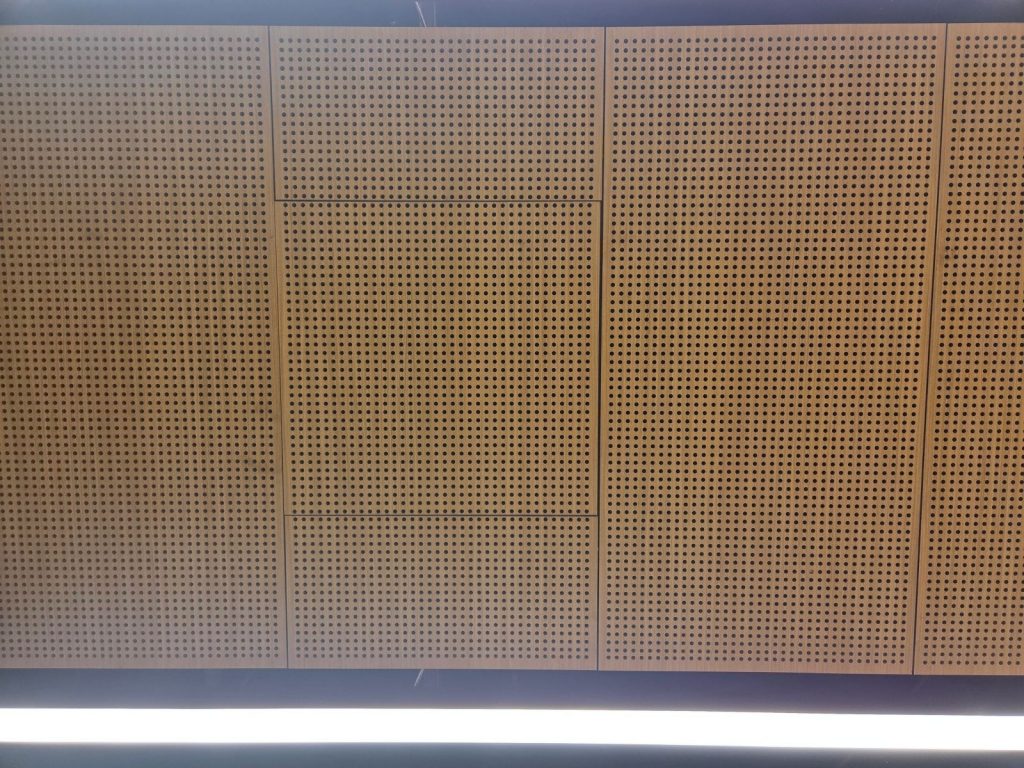
This installation was complemented by our fabric acoustic panels in the music room.
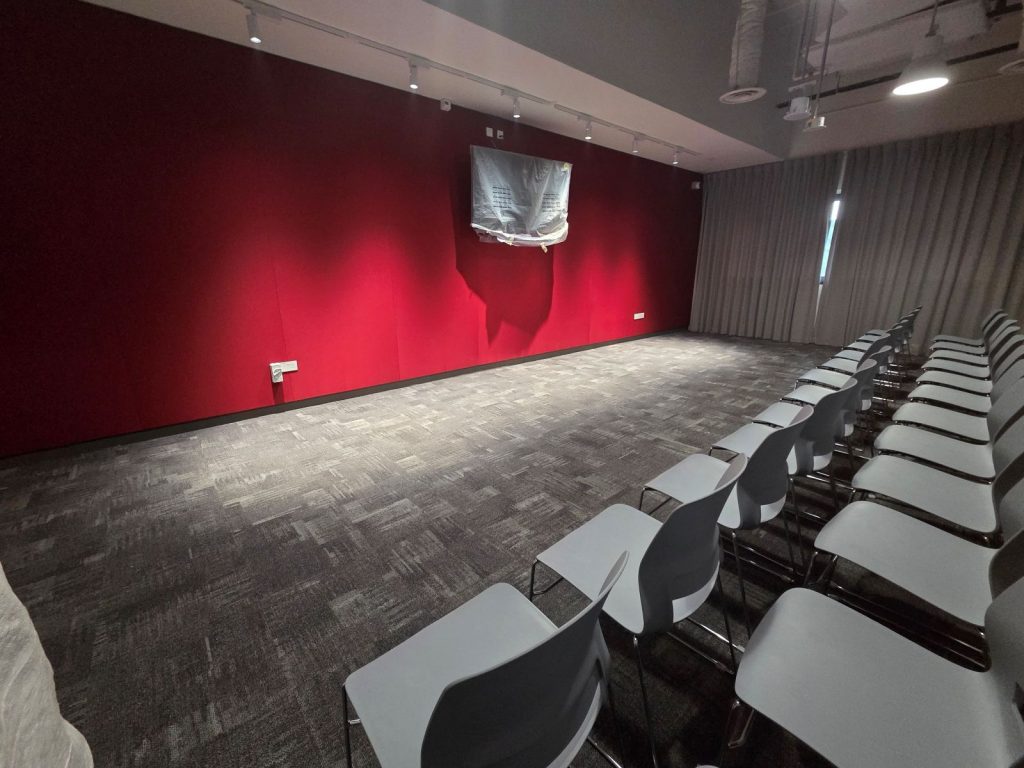
Fabric Acoustic Panel
Our fabric panels are site fabricated to ensure completeness and minimal gaps to the existing wall condition. This enables us to provide a seamless look, almost like paint.
Our fabric panels utilize an acoustically transparent textile stretched over a high-density sound-absorbing core. Because the fabric allows sound waves to pass directly through into the core rather than bouncing off the surface, sound energy is efficiently trapped and dissipated as heat.